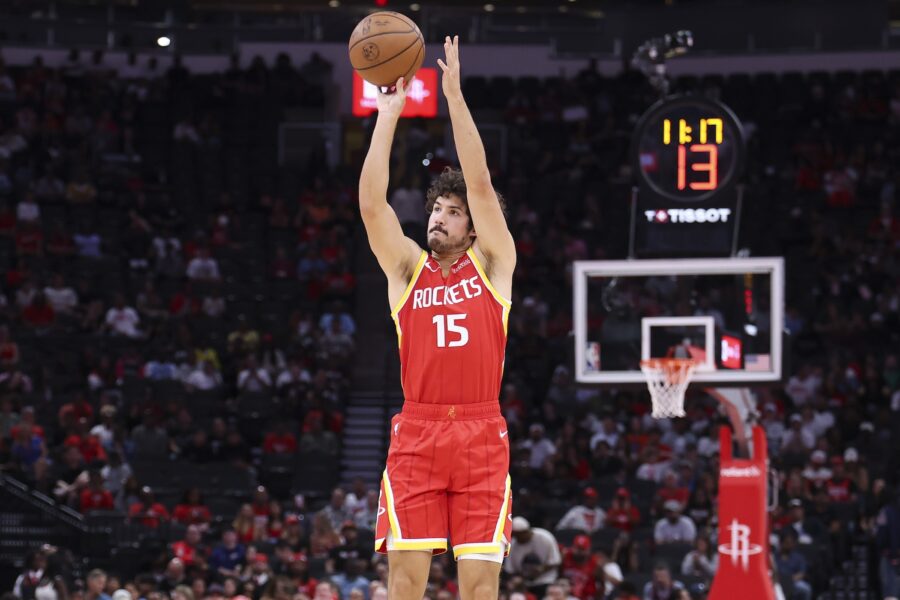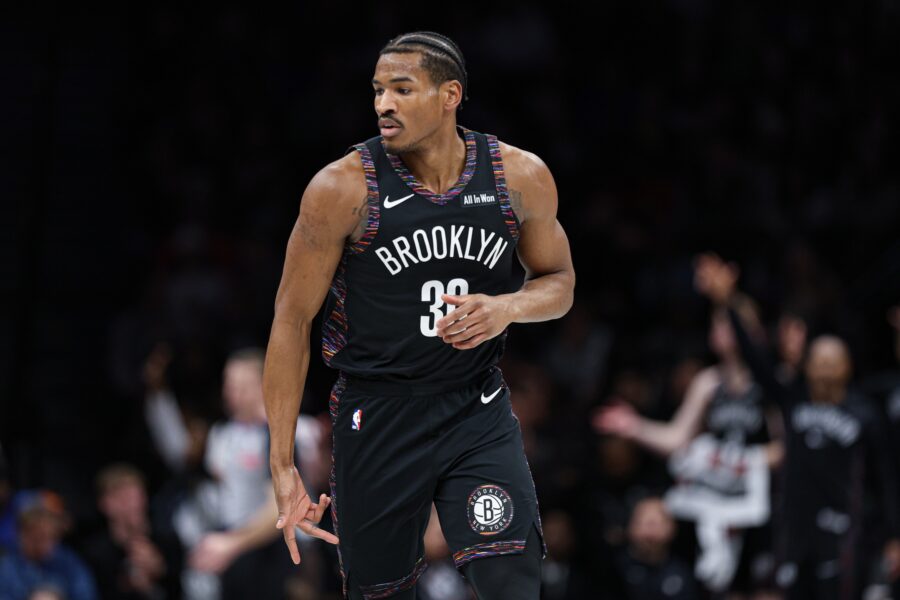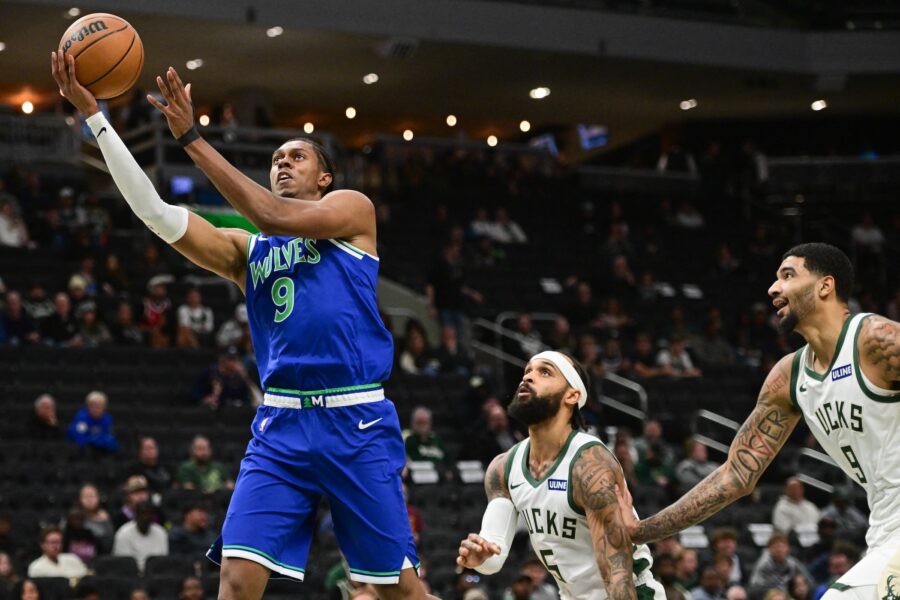
The Timberwolves are exercising their rookie scale team options for the 2027/28 season on wing Terrence Shannon Jr. and big man Joan Beringer but will turn down their option on forward Cody Williams, reports Jon Krawczynski of The Athletic (Twitter links).
The decisions on Shannon and Beringer don’t come as a surprise, as Minnesota is counting on both youngsters to be regular rotation players off the bench for the team this season.
Through the Timberwolves’ first five games, the duo has delivered — Shannon is averaging 14.2 points, 3.8 rebounds, and 2.4 assists in 23.2 minutes per contest and shooting 44.0% on three-point tries, while Beringer is contributing 6.8 PPG and 7.6 RPG in 15.6 MPG and shooting 68.2% from the floor.
Shannon, the 27th pick in the 2024 draft, is earning $2.8MM this season and now has his $5.05MM salary for 2027/28 guaranteed. He’ll become eligible for a rookie scale extension next July.
Beringer, drafted 17th overall in 2025, is earning $4.4MM this season and $4.62MM next season. The Timberwolves will have until November 1, 2027 to make a decision on his $7.1M option for 2028/29.
[RELATED: Decisions On 2027/28 Rookie Scale Team Options]
As for Williams, the 6’8″ wing spent his first two seasons in Utah before being traded from the Jazz to the Timberwolves in August. The 10th overall pick in the 2024 draft and the younger brother of Thunder star Jalen Williams, Cody struggled to produce during his time with the Jazz and has gone scoreless in 11 total minutes across three outings so far this fall for the Wolves.
Still, according to Krawcznyski, the Wolves have liked what they’ve seen from Williams so far, despite his limited contributions in the early going. But his option for 2027/28 was worth $7.67MM, which was unpalatable for a team facing a cap crunch, based on what the 21-year-old has shown so far at the NBA level.
As a result of the decision, Williams will now become an unrestricted free agent next summer, assuming he plays out the rest of his current contract. At that time, the Wolves – or his new team, if he’s traded during the season – would be prohibited from offering him a starting salary that exceeds what his option would’ve been worth. However, rival suitors would be able to go higher if they so choose.