Students at North Carolina State University received an unexpected surprise during their graduation ceremony when Indian-origin philanthropist Anil Kochhar announced that he would pay off all final-year education loans for 176 graduates of the university’s Wilson College of Textiles.
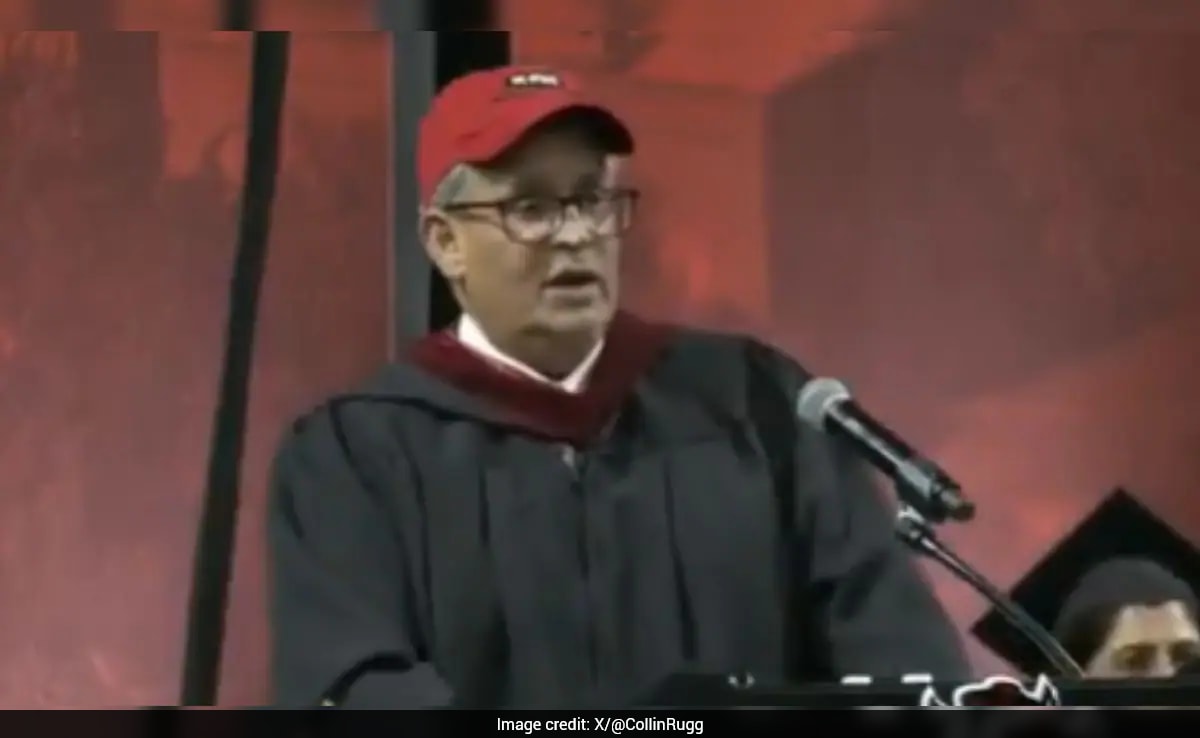
According to the New York Post, the announcement was made during the commencement ceremony held at Reynolds Coliseum on Friday. Kochhar, who delivered the commencement speech, said the gesture was meant to honour the journey of his late father, Prakash Chand Kochhar, who had travelled from Punjab to Raleigh decades ago.
Wearing a red NC State cap, Anil Kochhar told the graduating class of 2026 that it was his privilege to announce that, in honour of his father, he and Marilyn Kochhar would provide a graduation gift to cover all the final-year education loans incurred by Wilson College graduates during the 2025-26 academic year.
University officials said the Kochhars coordinated with school leadership and the Office of Scholarships and Financial Aid before making the announcement.
Dean David Hinks said he could not be more grateful to Anil and Marilyn for the extraordinary investment in the college’s newest alumni. He added that one of the institution’s primary goals is to make Wilson College affordable for all, and said the Kochhars were helping the college achieve that aim.
During his speech, Anil Kochhar reflected on his father’s journey from India to the United States. He said that 80 years ago, a young man travelled thousands of miles from India to Raleigh with little more than hope and determination. He added that his father could not have known where that journey would lead, what kind of life it would create, or that one day his son would stand before a graduating class at the same institution that welcomed him.
Born in Punjab, India, Prakash Chand Kochhar developed an early interest in textiles and pursued training and work related to cotton spinning, weaving and finishing. He arrived at NC State in 1946 and earned his bachelor’s degree in textile manufacturing in 1950, followed by a master’s degree in the same field in 1952.
His career in textile engineering later took him across several US states and different parts of the world. According to the university, those experiences helped shape the legacy he hoped to leave behind, centred on education, opportunity and community.