New Delhi:
Russian President Vladimir Putin has called on SCO members to establish a development bank that operates independently of financial systems he says are used to exert economic and political pressure. He argued that the proposed SCO Development Bank should be insulated from mechanisms employed by some countries to secure unilateral advantages in global affairs.
The push comes as Russia seeks to reduce its reliance on the US dollar and Western-dominated financial networks amid continuing sanctions. The proposal has also gained relevance for Iran, another SCO member facing extensive Western restrictions, as both countries look to expand alternative financial and trade frameworks within the bloc.
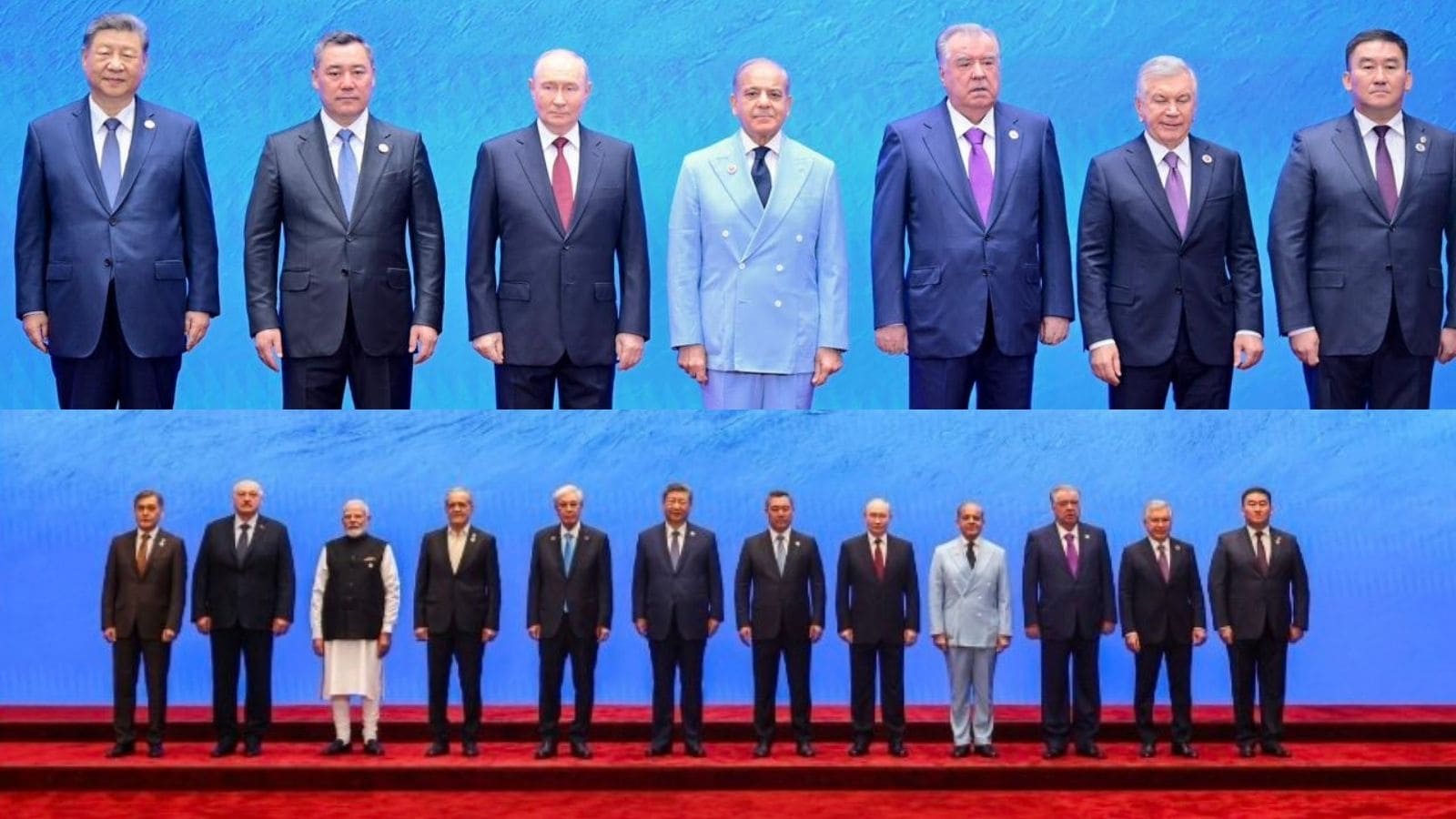
The growing economic weight of the SCO is increasingly drawing attention in Washington. Over the past two decades, the organisation has evolved from a six-member grouping into a 10-country bloc comprising China, India, Russia, Iran and key Central Asian states. During the same period, its share of global GDP, measured at purchasing power parity (PPP), has risen steadily and now exceeds that of the G7.
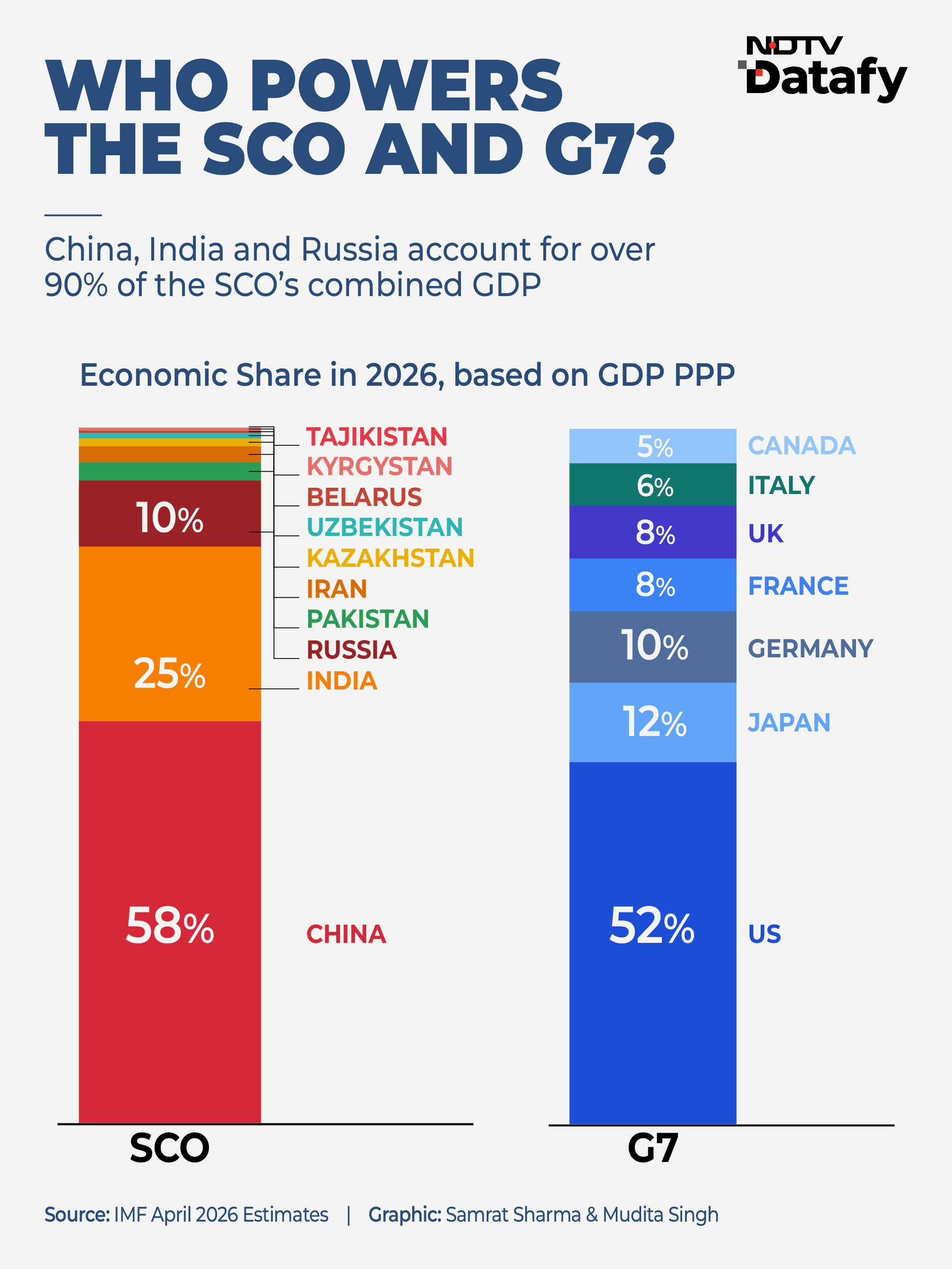
In 2001, the SCO accounted for 10.6% of the global economy in PPP terms, compared with 47.2% for the G7. Since then, the gap has narrowed sharply. The SCO’s share surpassed that of the G7 in 2021 and is estimated at 34.3% in 2026, against 28% for the G7, according to the IMF April 2026 estimates.
While the SCO is not a formal anti-US alliance, its expanding economic clout, growing membership and efforts to build alternative platforms for trade, finance and security have made it an increasingly important geopolitical bloc that Washington is closely watching. China alone accounts for 58% of the SCO’s economic output, while India contributes nearly 25% and Russia about 10%. Together, the three countries make up nearly 93% of the bloc’s economic strength.
Meanwhile, Prime Minister Narendra Modi said at the 26th SCO Summit that the organisation had laid a strong foundation for cooperation over the past 25 years and should now focus on translating that cooperation into tangible outcomes over the next 25 years. Reiterating his vision of the SCO’s three pillars, Security, Connectivity and Opportunity, PM Modi stressed the need to move beyond intent and deliver concrete results.