Kei Nishikori’s qualilfying loss ended his Grand Slam career on Friday in New York.
Chris OddoAugust 28, 20263 minute read
Kei Nishikori’s storied Grand Slam journey came to a poignant, full-circle conclusion at Flushing Meadows on Friday, falling 6-4, 7-6(3) to 20-year-old countryman Rei Sakamoto in the final round of US Open qualifying.
The 36-year-old Japanese star, who announced he will retire following the Japan Open later this season, fell just one win short of a final main-draw appearance at the site of his greatest major triumph. It was in New York 12 years ago that Nishikori made history, stunning Novak Djokovic to become the first Asian man to reach a Grand Slam singles final.
Nishikori entered qualifying via a wildcard and embraced the moment without expectation.
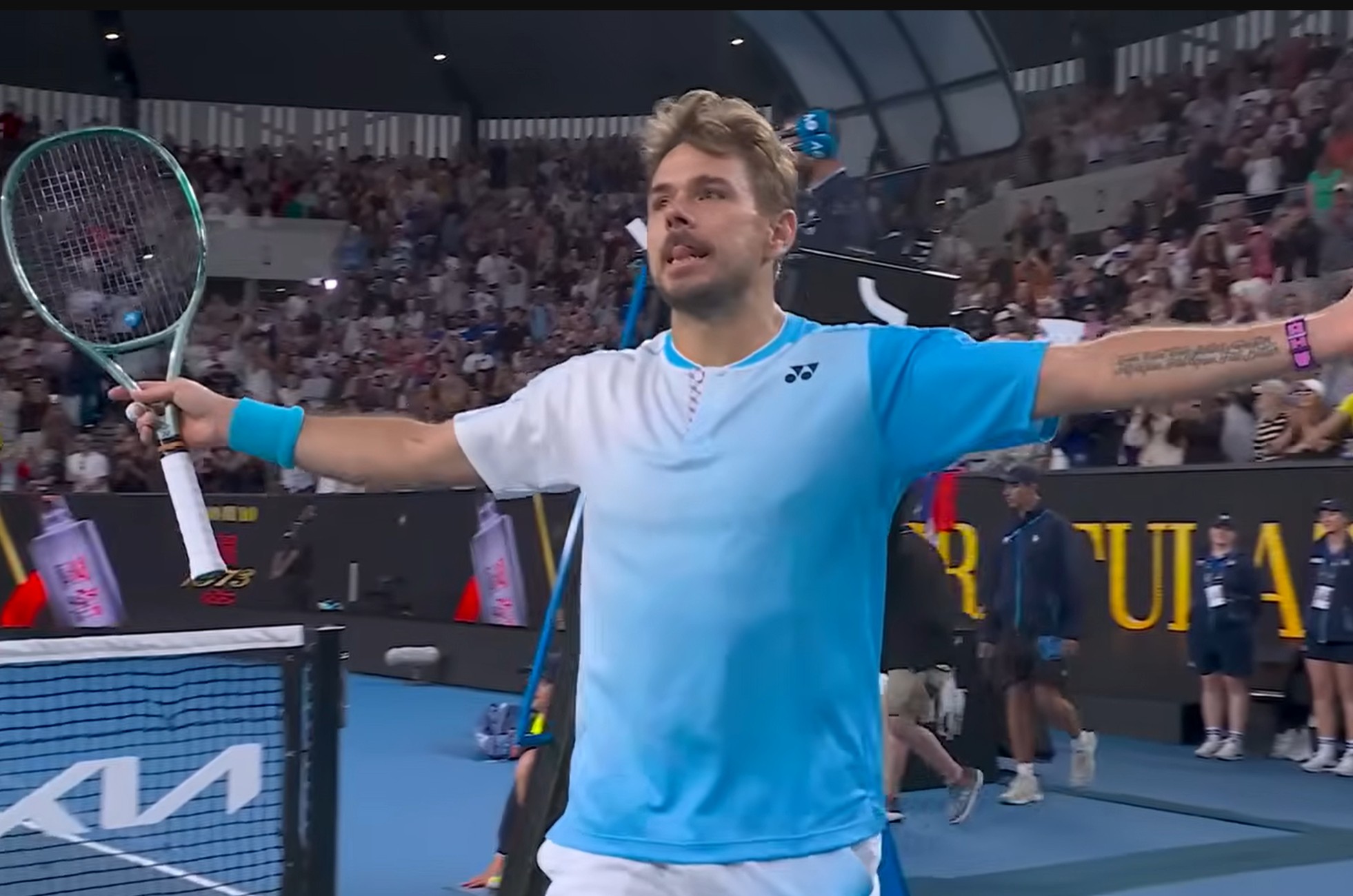
“I was happy to get in, even qualifying,” he said, acknowledging fellow veteran Stan Wawrinka’s main-draw spot, when asked. “I know it’s kind of rare to give a wildcard to someone who didn’t win a slam… Stan deserves it. He won many Grand Slams, and he’s still fighting, and I’m really proud and respect Stan for what he’s doing.”
Facing Sakamoto—a protégé he mentored at the IMG Academy—Nishikori said he felt no burden.
“I’m sure he had more pressure than me. You know, I had zero pressure coming into today’s match. I was really excited to play Rei… I know he doesn’t want to lose to me right now. He played really good, very fast, good serve, and didn’t give me good rhythm.”
Though his body ultimately yielded to time and injuries, Nishikori walked away with peace and gratitude. “I wish I could win today and go into the main draw, but still, I’m really happy I played three good matches.”
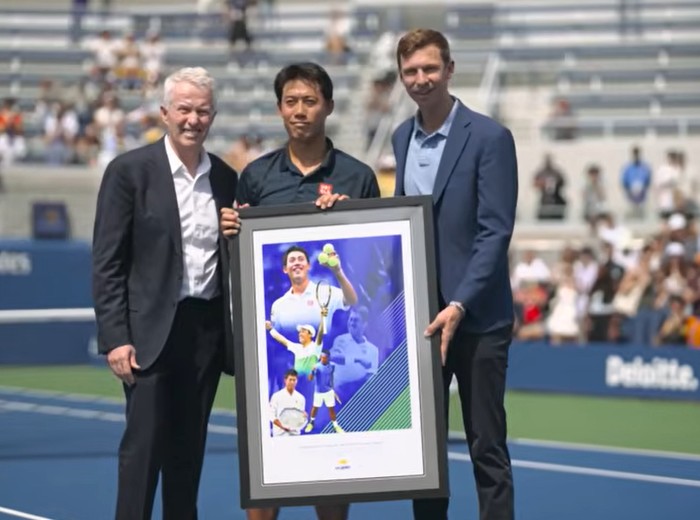
Following the final point, the tournament made sure the former World No. 4 was sent off in style with an emotional on-court ceremony. US Open Tournament Director Eric Butorac and USTA CEO Craig Tiley presented Nishikori with a commemorative framed collage on Court 11, honoring his 2014 finals run, 12 ATP titles, and Olympic bronze medal. Taking the microphone to address a roaring crowd, Nishikori expressed his gratitude in both English and Japanese, reflecting on nearly two decades on tour and thanking New York for some of the greatest memories of his life.
Looking ahead to his post-playing life, Nishikori remains focused on shaping the game’s future in his home region. “I hope I can help, especially Japanese or Asian tennis,” Nishikori reflected. “It’s kind of sad that there are no top-20 or top-30 Asian players after me. That a little bit worries me, but like you see Yibing [Wu] and Jerry [Shang], there are many Chinese players who can be top 20, top 10, I hope, and also Rei can be a great player. I hope I can maybe help in some way, not right now but maybe in the future, yes. I hope there can be, you know, three or four people in the top 20, top 30.”