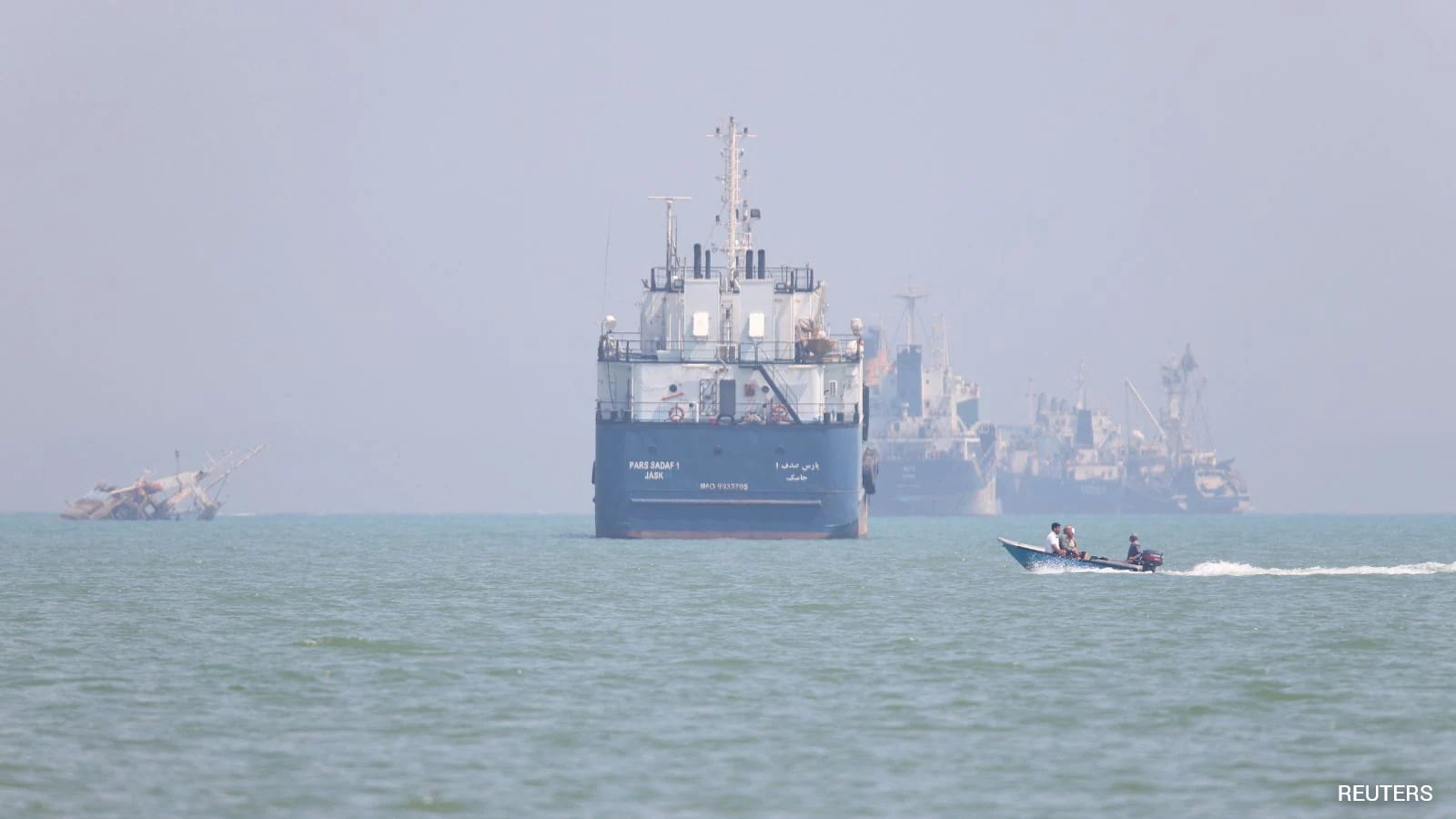
Iran will charge a “maritime service fee” in the Strait of Hormuz, its foreign ministry spokesperson said on Monday, as Tehran expressed “deep mistrust” in the US despite signing a memorandum of understanding with Washington to stop the war.
Talking to reporters, Iran foreign ministry spokesperson Esmail Baghaei said Iran would not charge a toll for ships crossing the key strait under a new framework deal with the US.
“We have always maintained that we do not seek to collect transit tolls, but fees for navigation services, environmental protection, ship insurance and other necessary services will be charged,” he said during a press briefing.
Baghaei reiterated that despite signing the deal with the US, Tehran still holds a “deep mistrust” in Washington.
“Unfortunately, it must be acknowledged that Iran’s deep mistrust of the United States stems from long history of wrongdoing by American leaders. The United States still has a long way to go before it can earn the trust of the Iranian people,” he noted.
The foreign ministry spokesperson described the framework as “”merely a step toward reducing tensions and end a war” that broke out on February 28, when the US and Israel jointly launched strikes on Iran that killed its erstwhile Supreme Leader Ayatollah Ali Khamenei.
However, Baghaei noted that the US was committed to releasing Iran’s frozen funds abroad and compensating it for damages, calling it an “essential part” of the deal.
His comments came hours after Iran and the US agreed to sign a memorandum of understanding to immediately end the war, which has shaken the globe as the closure of the Strait of Hormuz prompted steep rises in oil prices.
Talking about Israel, he said, “The United States must honour its commitments. It must ensure that the Zionist regime also respects its own regarding Lebanon.”
Details of the US-Iran deal were not immediately released, but it appeared that it would not be implemented until it is signed, which mediator Pakistan said would happen Friday in Geneva. Even if the strait – a crucial waterway for the world’s oil and natural gas – fully opens then, it will likely take months for the global energy crisis sparked by its closure to ease.