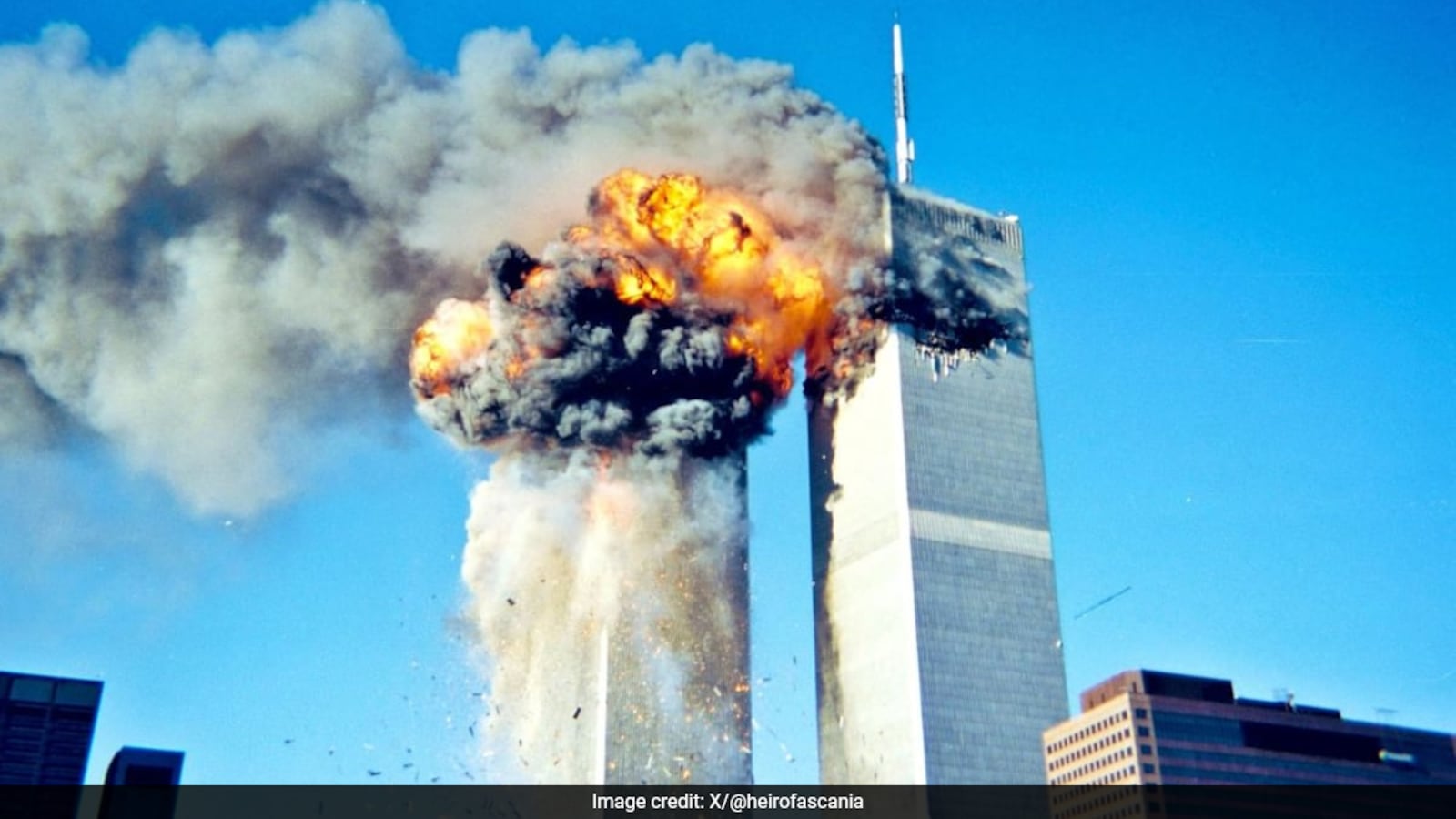
A week before the September 11 attacks in 2001, US President George W Bush met with several members of his administration in the White House Situation Room to discuss al-Qaeda. On the agenda was one question, whether the terrorist group was a big threat for the US.
White House staffer Richard A. Clarke, who attended the meeting, sent a personal note to National Security Advisor Condoleezza Rice, calling al-Qaeda a force that would not hesitate to kill Americans, as per Newsweek.
Memo Warned Of Al-Qaeda Threat
Clarke had been working on an aggressive plan to fight al-Qaeda, since the USS Cole attack in October 2000 left 17 Americans dead.
He had called the group an “active organized major force” in a memo to Rice in January 2001.
A week before 9/11, Clarke had asked Rice if the US was “serious about dealing” with the group.
He pointed out that Washington had not retaliated for the attack on the USS Cole in Yemen last year, a move that could embolden al-Qaeda and the Taliban. The groups would believe they could kill Americans without paying any price, he argued.
He cautioned in his memo, ”Decision makers should imagine themselves on a future day when the C.S.G. has not succeeded in stopping Al Qaeda attacks and hundreds of Americans lay dead in several countries, including the U.S. What would those decision makers wish they had done earlier? That future day could happen at any time.”
Clarke blamed the Pentagon and the CIA for claiming that Afghanistan was unimportant. He described their bureaucracy as “masterful at passive aggressive behaviour.”
The meeting was dominated by the matter of when Predator reconnaissance drone flights would be flown over Afghanistan again, an issue which remained unresolved by the end of the interaction.
Later on, Rice told the 9/11 Commission that she thought Clarke’s memo was a good warning. However, she believed that after nine years of being a national security council staffer, Clarke was frustrated that he often failed to persuade people and agencies to set the agenda he wanted.
The former NSA said later that she thought it would take three years or so for the al-Qaeda strategy to work. The terror group struck much sooner, changing the world forever with the attacks.