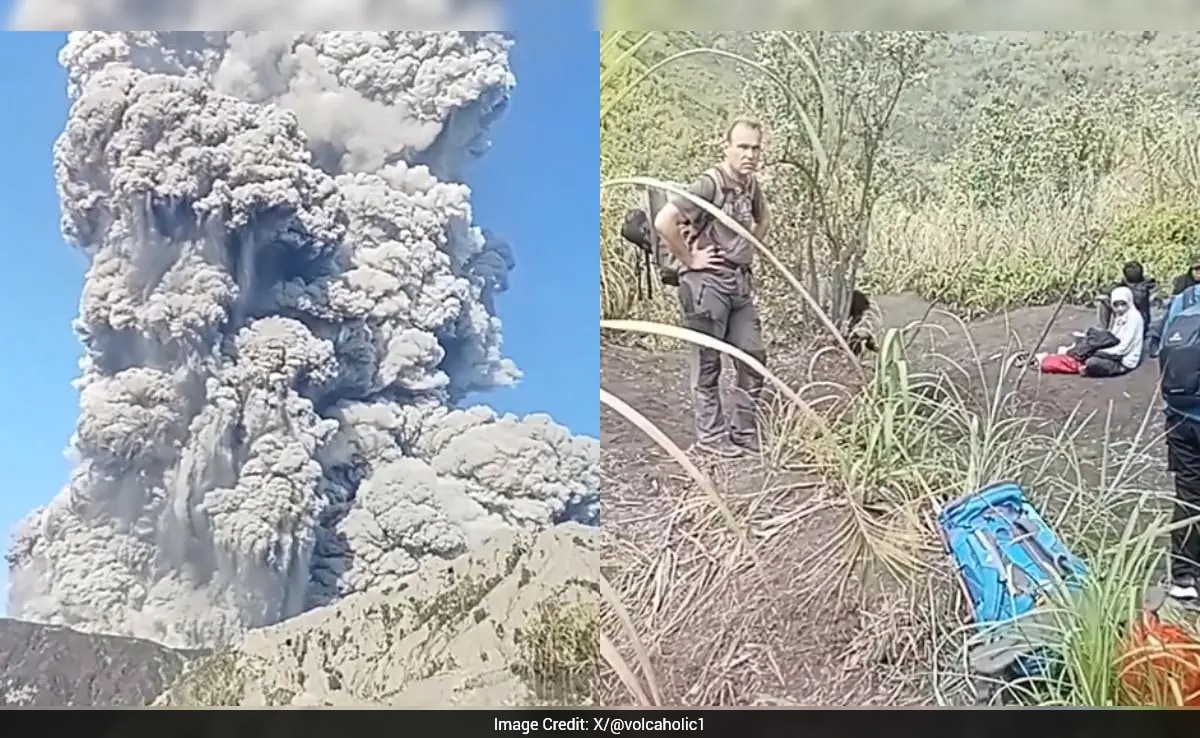
A deadly eruption at Indonesia’s Mount Dukono on Friday (May 8) morning left three people dead and several hikers missing. The volcano sent a massive 10,000-metre (32,808 ft) ash column into the sky, prompting a desperate evacuation. A harrowing footage from the scene captured a tour guide racing to lead a group of tourists to safety as he realised the magnitude of the situation.
With the ash and smoke spreading quickly, the tourists can be seen rushing down while the camera points upwards, where some other hikers may have been visible earlier.
“Oh, the rocks are coming. Oh my god, it’s killed them. Oh my god, they died,” the guide can be heard saying in the now-viral clip.
Though climbing had been banned, a total of 20 hikers managed to enter the volcano area, which resulted in the ultimate catastrophe. The victims included one Indonesian citizen from Ternate and two tourists from Singapore, according to a report in BBC.
The North Halmahera police chief stated that the tourists had ignored the warning signs, especially when Mount Dukoni has been showing increased activity over the past month.
“Local residents understand and don’t want to climb. Many [hikers] are foreign tourists who wish to create content,” the chief said.
🚨 Three hikers dead and at least 10 missing after deadly eruption at Mt Dukono 🚨
There’s been a deadly eruption at Mount Dukono in Indonesia today.
Authorities now say at least 3 hikers have died, with at least 10 still missing and rescue teams continuing searches on the… pic.twitter.com/hLGEX3CBAm
— Volcaholic 🌋 (@volcaholic1) May 8, 2026
Located on North Maluku island in the Halmahera Sea, near the town of Tobelo, Mount Dukono is known for its frequent and often unpredictable eruptions. It has remained persistently active for years, regularly sending ash plumes into the air and posing risks to both locals and visitors. The volcano is a popular spot for volcanologists and adventure seekers, but its eruptions can pose a threat to nearby communities.
Experts and seasoned trekkers emphasise that such environments demand not just physical preparedness but also situational awareness that typically comes from years of on-ground experience. Local guides, familiar with eruption patterns, wind directions, and terrain risks, can make critical decisions in seconds — decisions that outsiders may not immediately understand.