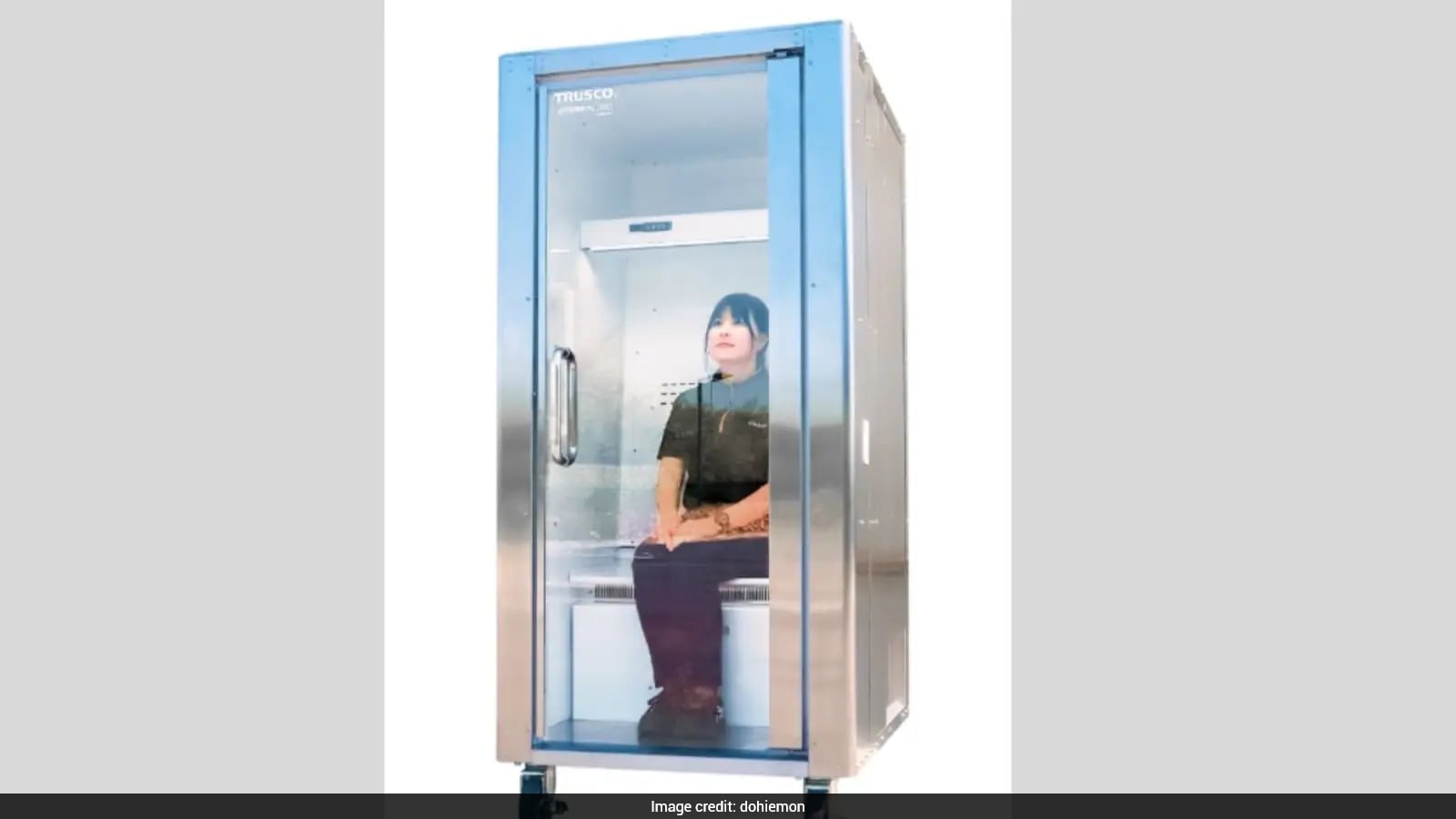
The glass door closes, and a curtain of cool air spills over your head, neck and shoulders, delivering instant relief from the punishing summer heat.
This is what it’s like to chill in the Do Hiemon Box, an oversized stainless-steel refrigerator that looks big enough to fit a human being, because that’s exactly what it’s designed to do. Trusco Nakayama Corp. has sold about 200 of the 1.5 million yen ($9,500) booths to steel mills, construction sites, golf courses, universities and leisure facilities since it went on sale earlier this year.
As global temperatures climb, Japan’s summers have been getting hotter and more humid, with readings regularly exceeding 35C (95F). The country’s weather agency has had to come up with new terminology for sizzling-hot days, while national broadcaster NHK routinely warns viewers of heatstroke risk. During the season, pharmacies and household-goods stores fill their shelves with blue-toned products promising cooling relief.
Trusco’s contraption, effectively a tall box on wheels with a window and a bench that plugs into a standard electrical outlet, is meant to be used in places without easy access to air conditioning. Following last week’s earthquake that struck Kumamoto, the company sent units to evacuation shelters.
The Do Hiemon Box, which keeps the temperature at a brisk 15C and blows jets of 5C air once someone sits inside, is designed to offer quick relief from potential heat exhaustion or heatstroke, rather than serve as a lounge to sit back and relax.
“The concept was less about providing a place to rest and more about providing equipment that could help prevent heat-related conditions from becoming more severe,” said Fumiaki Matsubara, general manager of Trusco’s product division.
Trusco, which has a market value of about $1 billion and has about 3,300 employees, mainly makes machinery and tools, as well as equipment for homes and offices. The company has fielded inquiries about the human refrigerator from as far afield as Germany and the US, Matsubara said.
As extreme heat becomes more common, the company sees potential demand from shopping malls, summer festivals and other crowded venues.
Tighter government regulations to prevent heatstroke are adding momentum. “Demand for our broader workplace cooling products has roughly doubled every year in recent years,” Matsubara said.
(Except for the headline, this story has not been edited by NDTV staff and is published from a syndicated feed.)