New Delhi:
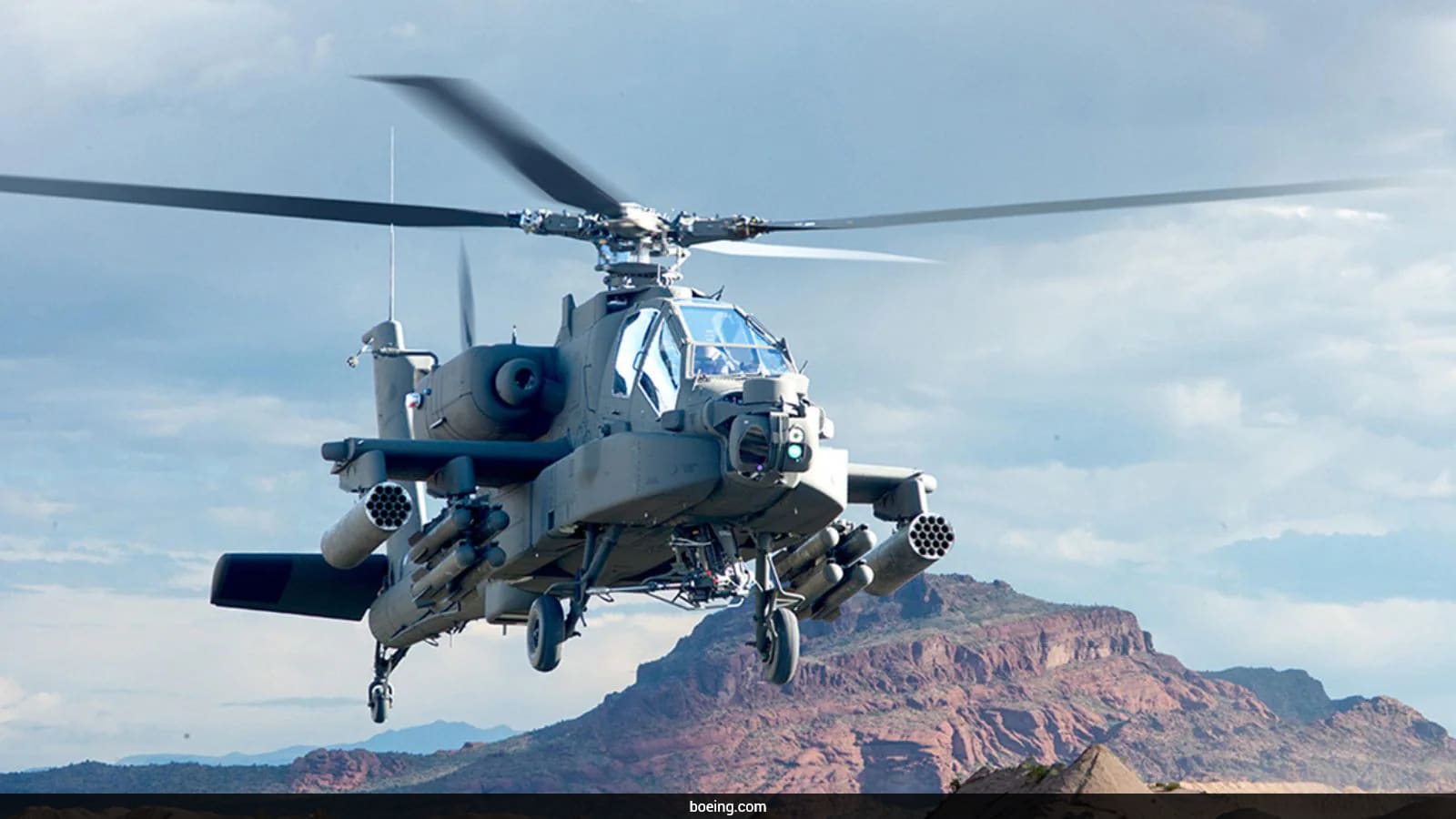
The US Army has tested its nine-tonne Apache attack helicopters against small unmanned targets in Germany this month to evaluate whether the 20th-century aircraft can survive and fight in modern drone warfare, the New York Times reported.
During the exercise named Skyfall 2, pilots from a battalion known as the Gunslingers manoeuvred over wooded terrain near Nuremberg to intercept propeller-driven Outlaw drones.
These radio-controlled aircraft have a 3.3-metre wingspan, roughly the size of Iranian and Russian Shahed attack models. Firing 30-millimetre steel practice ammunition instead of live missiles or explosive shells, a single Apache crew destroyed all four targets during one flight, according to the New York Times.
“If we had our go-to-war load, it would be a lot easier. These are just steel rounds,” Chief Warrant Officer Jarrad Walter, a pilot with the battalion, told NYT.
The tactical shift follows combat incidents in which low-cost Iranian Shahed drones evaded US air defence systems and accounted for the vast majority of American casualties during the conflict with Iran, including an Apache shot down over the Strait of Hormuz in June, the report said.
“It was like, this is a real threat, so let’s see what we can do about it. It’s not easy compared to what the Apache usually does, which is air to ground,” another Chief Warrant Officer, Michael Weisskopf, said.
US military planners see the helicopter’s inexpensive 30-millimetre cannon as a cost-effective counter to simultaneous drone swarms. But the aircraft’s top speed limits its effectiveness against newer variants like Russia’s jet-propelled Geran-4.
In Ukraine, for example, first-person view (FPV) drones saturate the frontlines and a new Ukrainian unmanned craft called the Stargate is being used to evacuate casualties. In such a battlespace helicopters can no longer loiter in combat zones for hours as they did in Iraq and Afghanistan, Weisskopf said.
“We’re not envisioning these at the front,” he added.
The report said two pilots who survived a crash in June in the Strait of Hormuz were extracted by a remotely operated US Navy sea drone.