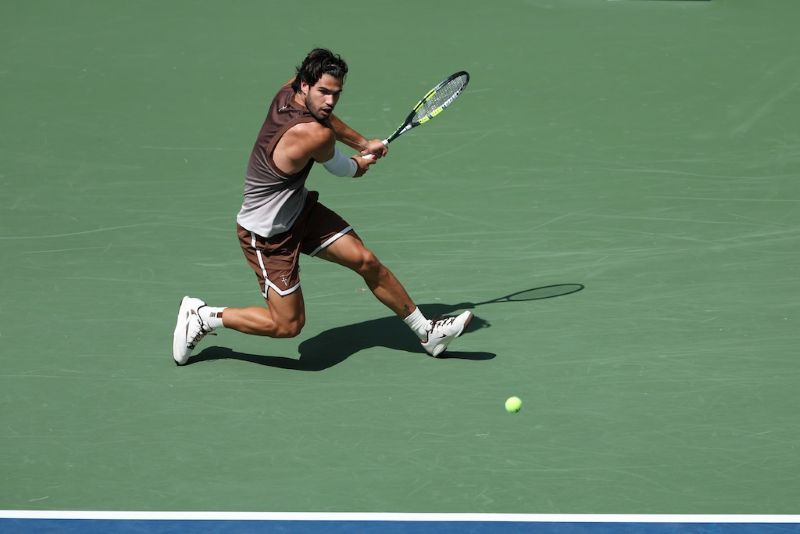
Surveying the crammed calendar, Carlos Alcaraz sees injury in his future unless he takes action.
Richard PagliaroSeptember 3, 20262 minute read
By Richard Pagliaro | Wednesday, September 2, 2026
Photo credit: Antoine Couvercelle/ROLEX
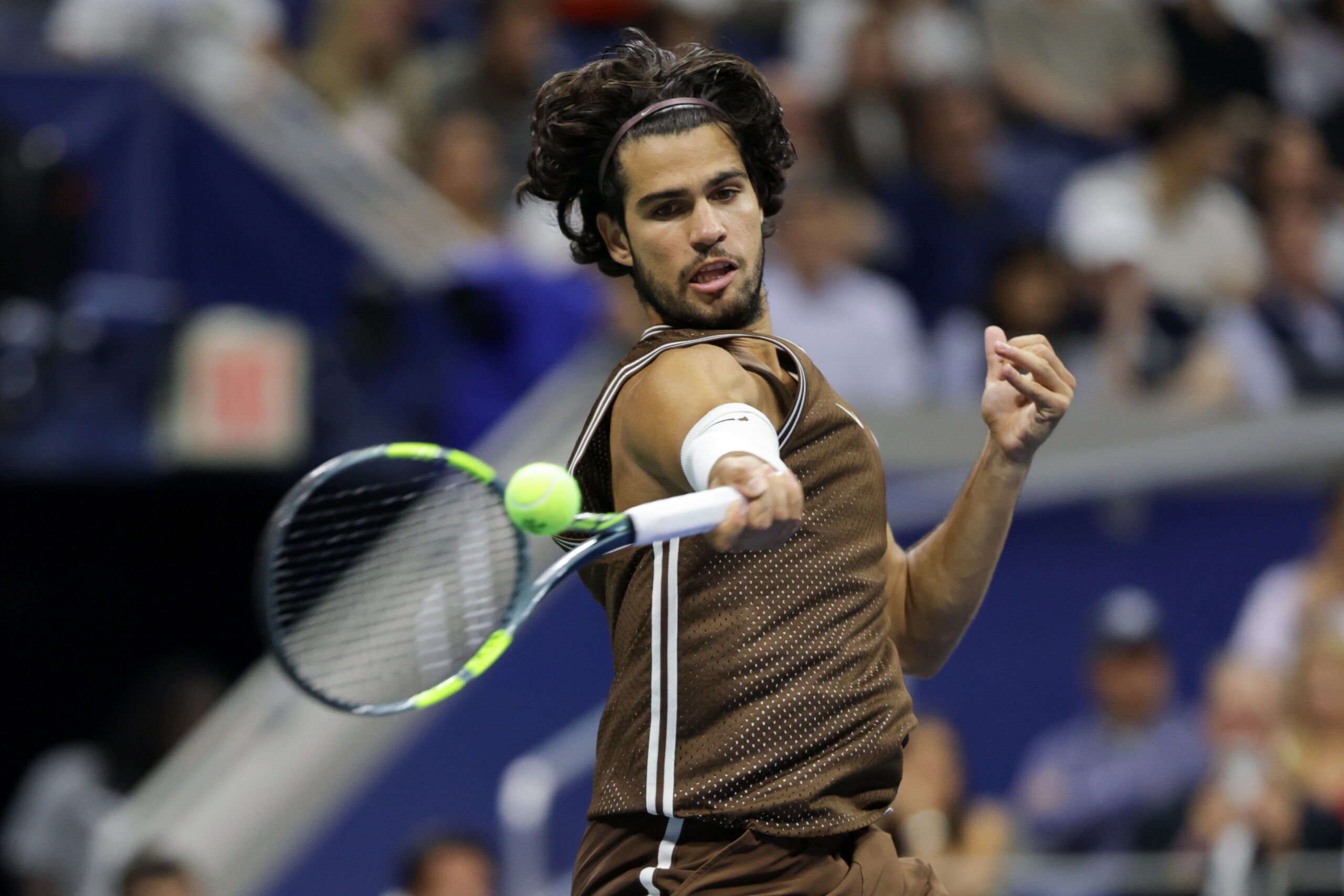
NEW YORK—When Carlos Alcaraz views the ATP crammed calendar he sees potential agony and injury.
The seven-time Grand Slam champion, who is playing his first tournament in four-and-a-half months after injuring his right wrist in Barcelona, said on lesson he’s learned from his injury-induced layoff is placing a priority on breaks to prevent injury.
Calling the pro calendar “impossible”, the reigning US Open champion said pressing pause on play will be his future pain-killer.
“Seeing how tight is the calendar, obviously I don’t want to have this break because an injury. But in the future, I’m going to take some breaks, some long breaks,” Alcaraz told the media after defeating Jaime Faria 4-6, 6-0, 6-3, 6-2. “Maybe not four months, but one month, two months, missing some tournaments, because it’s impossible to play them all.
“I think they adding more important tournaments. You know, in a way they making us to play. You can say, no. You can keep one or two.”
Alcaraz, who defeated Grand Slam king Novak Djokovic in the Australian Open final to make history as the youngest man to complete the career Grand Slam, said unless players schedule their own breaks, “we will see even more [injuries] in the future.”
“You can decide your calendar, but there are some Masters 1000s, some Grand Slams, and we’ve been out playing 40 weeks if we got to play every mandatory tournament that the ATP, you know, required us to play,” Alcaraz said. “So it’s impossible, and we are seeing a lot of players getting injured, a lot of players getting tired. If they don’t don’t do anything about it, we will see even more in the future.”
Of course the congested calendar has been a hot button topic among players dating back to the 1970s. Back then, many stars skipped the Australian Open to create a longer offseason and because the AO did not offer as much prize money as other Grand Slams at that time.
Acaraz said managing his schedule shrewdly is vital to longevity.
“But for me, you know, taking this break because an injury, it wasn’t that good, but you know, what I’m going to say is I’m going to take some breaks and missing some tournaments in the future for sure,” Alcaraz said.