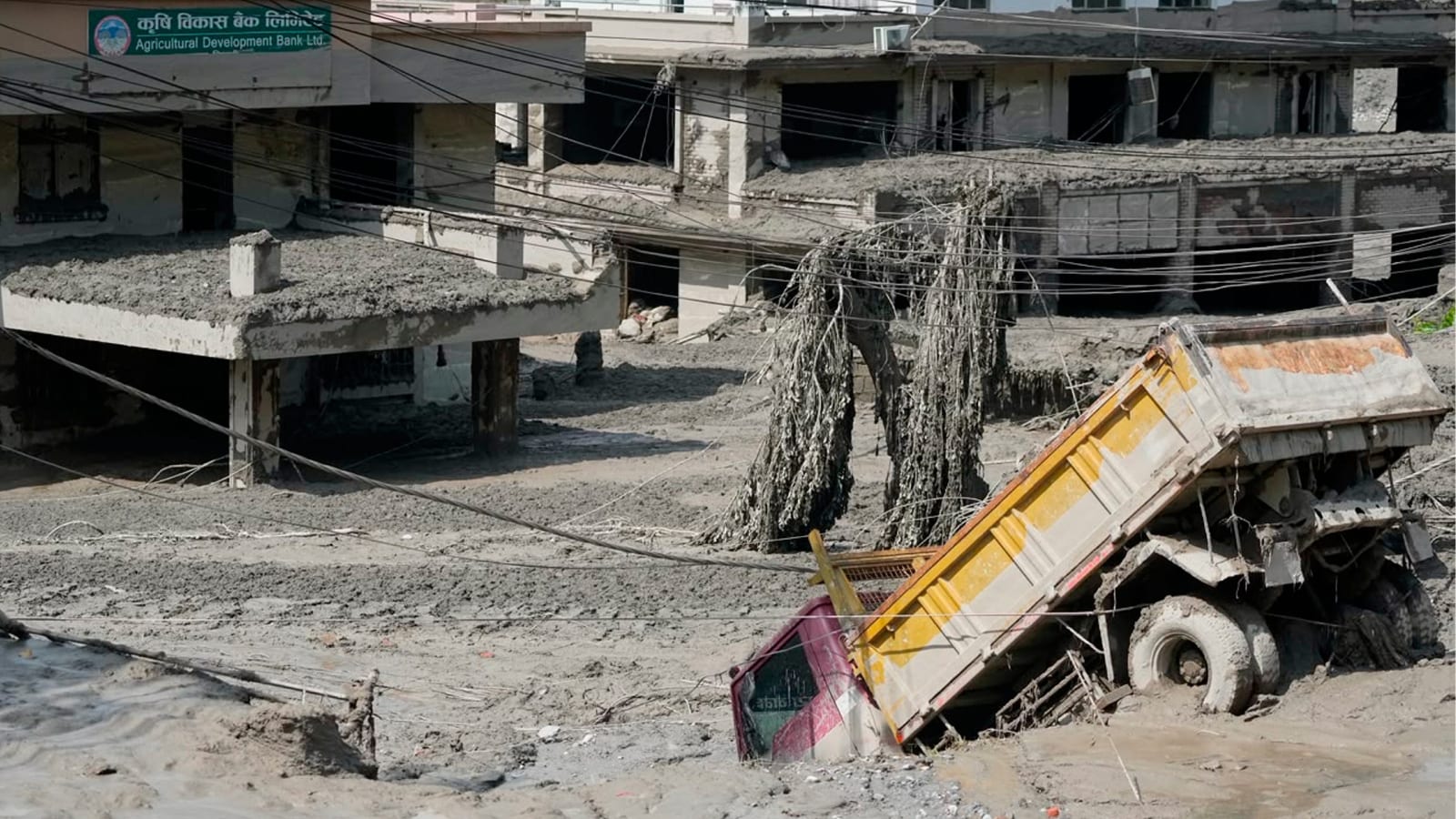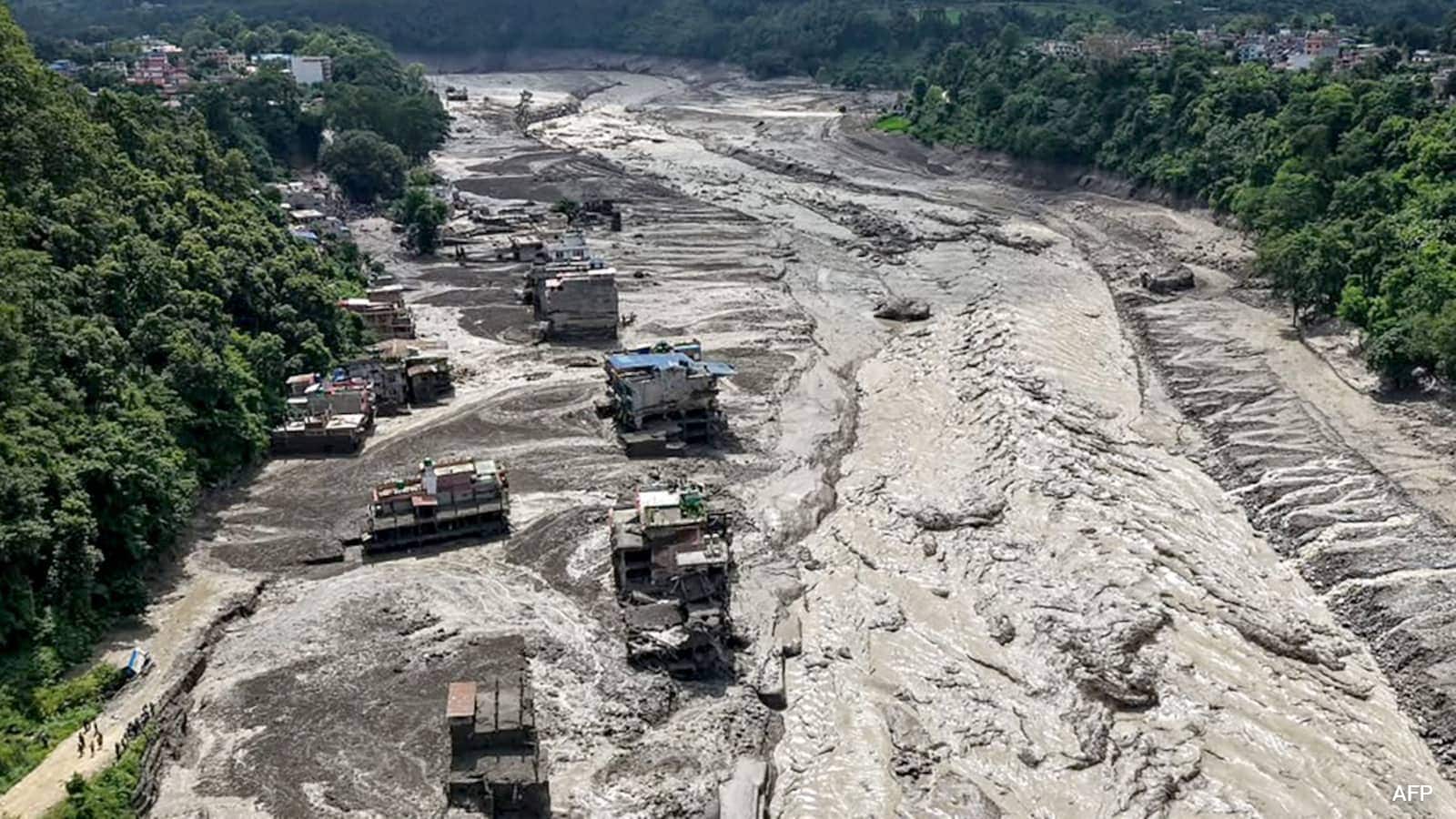
Nepal was hit by a major tragedy on Wednesday morning when flash floods struck the Himalayan border region of the country. At least 22 people have died and over 400 are missing with a torrent of water sweeping away villages and project sites in the region bordering Tibet. Among those missing are 108 Indians who were undertaking the Kailash Mansarovar Yatra – one of the most demanding religious journeys. The flood surged through the Bhote Koshi River at around 9 am (local time), reportedly coming from the direction of Tibet.
Also Read | In Nepal Floods, Glacial Lake Link And Flashback To Last Year’s Tragedy
This year, Ministry of External Affairs selected 1,000 Indian pilgrims for its officially organised Kailash Mansarovar Yatra. They travelled in 20 batches of 50 pilgrims each through two routes – Lipulekh Pass in Uttarakhand and Nathu La in Sikkim.
The government-organised pilgrimage has now concluded, with 941 pilgrims completing the journey. Of these, 464 travelled through Nathu La and 477 through Lipulekh.
But the number of Indians travelling to Kailash Mansarovar is not limited to those selected through the MEA’s annual process. Private operators also take Indian pilgrims through Nepal, making Kathmandu an important staging point for the pilgrimage. In June, the MEA issued an advisory after 52 Indian pilgrims were stranded in Kathmandu without the required Chinese visas and permits.
So, what draws Indians to Kailash Mansarovar?
Mount Kailash, situated in Tibet, which China claims as its own territory, is revered as the abode of Lord Shiva in India. Lake Mansarovar, located nearby, is also considered sacred. India’s official Kailash Mansarovar Yatra portal describes the pilgrimage as having deep religious and cultural significance.
It is believed that completing the pilgrimage and taking a holy dip in Lake Mansarovar will cleanse a lifetime of sins and grant Moksha (liberation from the cycle of rebirth).
Beyond Hinduism, the site is sacred to Buddhists (who see it as Mount Meru), Jains (where their first Tirthankara attained liberation), and followers of the Bon religion (its followers consider the mountain as the spiritual centre of the universe).
The journey is also physically challenging. Mount Kailash rises to around 6,638 metres, while Lake Mansarovar is at roughly 4,590 metres. High altitude, extreme weather and difficult terrain make acclimatisation and medical screening important parts of the journey.
For many pilgrims, however, the hardship is part of the pilgrimage itself – a journey of faith that can take them across some of the world’s most difficult terrain to a place regarded as sacred across several religious traditions.